In October 2025, the Val de Vie Foundation marked a significant milestone: ten years of structured, values-driven investment in the Paarl-Franschhoek Valley.
Born from the founder of Val de Vie Estate, Martin Venter’s conviction that a residential estate could be more than an exceptional place to live—that it could actively contribute to social upliftment—the Foundation has embedded giving into the very design of the estate. Through an innovative funding model that allocates 1% of developer sales and 2.5% of residents’ monthly levies to the Foundation, community investment is not incidental, but intentional. Over the past decade, this framework has directed more than R50 million into education, entrepreneurship development, and community advancement initiatives in the Valley.
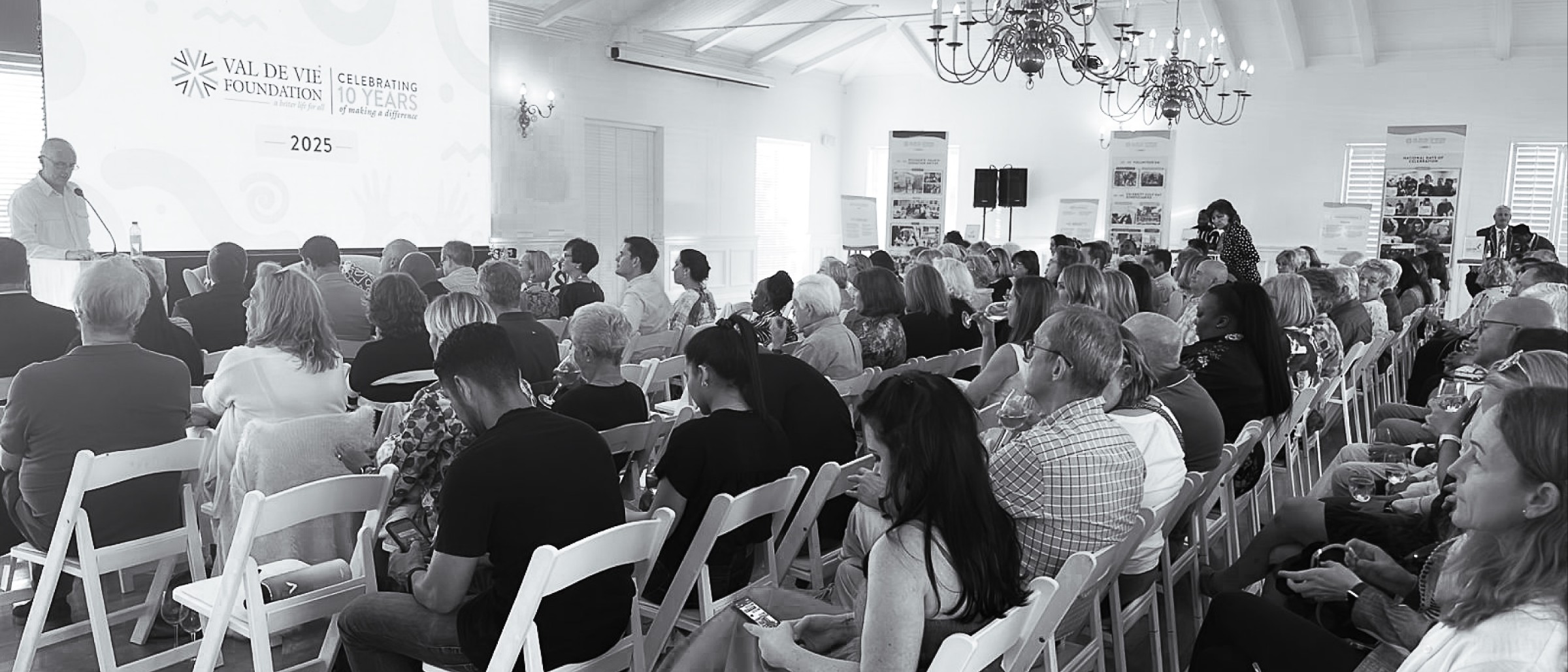
On 28 October, more than 120 residents and partners gathered at the Polo Pavilion Ballroom to reflect on this journey. The celebration was marked not only by storytelling and reflection but also by tangible commitment—with 15 residents signing up to volunteer after the event. As Val de Vie Estate HOA Chairman Fred Swanepoel noted, the milestone was less about celebrating an organisation and more about affirming the belief that dignity can be restored and hope intentionally built.
As the Foundation’s implementation partner, Nation Builder supports the due diligence, capacity strengthening, and impact oversight of funded beneficiaries—ensuring accountability, measurable progress, and sustained organisational health. This partnership strengthens both stewardship and long-term community outcomes. During the celebration, Nation Builder’s Social Investment Manager, Toni Grobbler, contributed to the panel discussion by affirming the critical role of capacity building alongside financial investment. While acknowledging that funding is essential, she emphasised that long-term impact is sustained when organisations are equipped with strong governance, compliant policies, and the operational foundations needed to steward resources responsibly. Toni highlighted the importance of professionalisation within the social sector—pointing to opportunities such as governance support, access to our Professional Support Services, such as business coaching, and continued professional development. Her contribution reinforced a central truth of the Foundation’s model: that meaningful change is not driven by funding alone, but by investing in the people, systems, and leadership that allow organisations to thrive.
As the Foundation looks to the next ten years, its commitment remains clear: to continue building A Better Life For All—through structured investment, strong partnerships, and measurable, lasting impact.